Custom Software for Garage Door Companies
A garage door company runs same-day spring calls and six-week install jobs off the same board, out of the same vans, for two completely different kinds of customer. Here is what custom software for a garage door business actually solves.
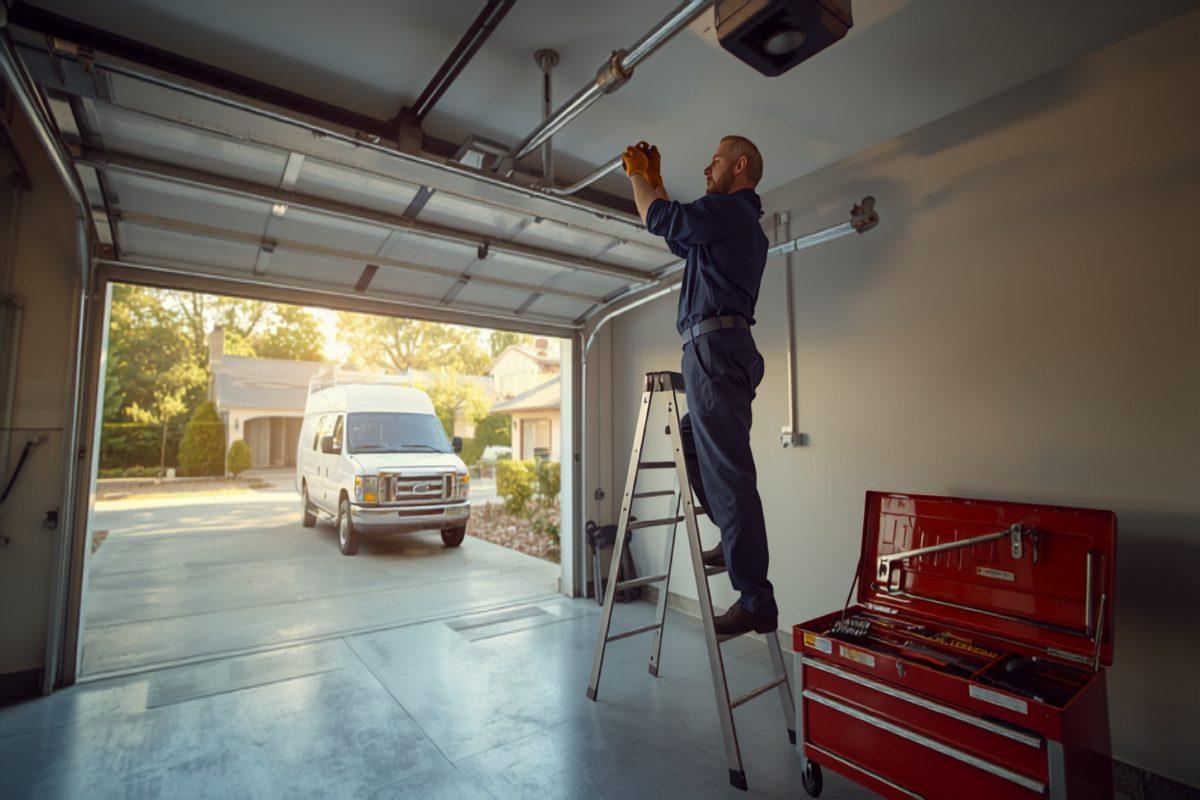
Two businesses, one dispatch board
A garage door company is really two operations sharing a phone number, a set of vans, and a schedule that has to satisfy both.
One is emergency service. A spring breaks, a car is trapped, a cable jumps the drum, and the customer wants someone today. That work arrives without warning, takes an hour or two, and is won or lost on how fast you answer and how often the technician finishes on the first visit.
The other is installation. A homeowner replacing a twenty-year-old door, a builder with eight houses closing in October, a warehouse putting in three sectional doors and a dock leveler. That work is planned, priced from measurements, and gated by a door that has to be ordered, built, and delivered before anybody can be scheduled.
These two have opposite constraints. Service is constrained by who is closest and what is on their van. Installs are constrained by what arrived on the truck. Run both from one calendar with one kind of appointment on it and you get the pattern every owner in this trade recognizes: an install crew pulled off a job at nine in the morning to chase a spring call, and a customer who took a day off work being told you will come back Thursday.
The van is a warehouse, and the wrong spring is a second trip
Garage door parts are unusually unforgiving about specificity. A torsion spring is not a torsion spring — it is a wire size, an inside diameter, a length, and a wind direction, and a spring that is close is a spring that is wrong. Rollers, cables, drums, hinges, and openers all carry the same kind of exactness.
Which means the single most consequential decision in the whole operation happens before the truck moves: whether the technician you sent is carrying the part the job needs. Most companies handle this with a mix of experience, a phone call, and optimism, and pay for it in second trips that consume an hour of drive time, a second dispatch slot, and whatever the customer thought of you.
Treating each van as a real stock location is what changes this:
- Per-van inventory with actual counts, so dispatch can filter on who has the part rather than who is nearest and hopeful.
- Parts identified by full specification — wire size, inside diameter, length, wind — because a partial description is how the wrong spring ends up on the truck.
- Consumption recorded at the job, so stock draws down as work happens instead of during a Saturday count.
- Replenishment lists generated per van from what was used, rather than from a technician remembering to mention it on Friday.
- Parts used flowing straight onto the invoice, which is where most of the quiet under-billing in this trade lives.
- First-visit completion tracked as a number, per technician and per call type, so you can see whether the stocking rules are working.
The stock-location thinking here is the same problem covered in custom inventory management software, with one twist specific to this trade: your warehouses move, and five of them are out of the building by seven-thirty in the morning.
A quote is a set of measurements, not a price
The install side starts with somebody standing in a garage with a tape measure, and what they write down determines whether the job is profitable, whether the door fits, and whether the crew has what they need on install day.
Opening width and height. Headroom and backroom. Sideroom on both sides. Whether the track is standard lift, low headroom, or high lift, and what radius. Spring cycle rating. Insulation value, window layout, hardware finish, opener horsepower and drive type. On commercial work, add whether it is sectional, rolling steel, or a fire door, and what the wall condition and power supply look like.
When that lives on a paper form that gets photographed and texted, three things happen. The estimate gets built from an abbreviated version of it. The order gets placed from an abbreviated version of the estimate. And the crew shows up on install day to discover that the headroom will not take the track they brought.
Making the measurement a structured record, attached to the opening rather than to the job, fixes the chain end to end. The quote is generated from the specification. The purchase order is generated from the quote with the same numbers. The install work order shows the crew the same measurements the estimator took, plus the photos. Nothing is retyped, so nothing drifts. The general shape of this — quoting from structure rather than from a blank line item — is the subject of custom estimating software.
The install calendar is really a materials calendar
Nearly every install date a garage door company promises is a bet on a delivery date. Stock white sectionals move fast. A custom color, a carriage house style, an insulated commercial section, an oversized opening, a specific glass package — those are lead times, and lead times move.
Scheduling installs from the customer's preference and hoping the door arrives is the default, and it produces a specific, expensive failure: the crew is booked, the customer has arranged their day, and the door is still on a truck. Everyone downstream of that job moves too.
- Purchase orders tied to the job, with promised and confirmed dates tracked separately, because those are not the same fact.
- Install scheduling gated on material receipt, so a date can only be committed once the door is actually in.
- Partial receipts visible — sections here, opener here, track backordered — since a job that is 90 percent received is still not installable.
- Supplier lead time recorded over time per product line, which turns "about three weeks" into a number you can quote against.
- Staged material assigned to the job in the yard, so nobody loads the wrong customer’s door.
- Automatic customer notification when a date moves, since the cost of a late door is small next to the cost of a customer finding out by waiting.
Builder work adds a second layer, because the date is not the homeowner's preference — it is a slot in someone else's construction schedule that moves without telling you, and you are one of forty trades trying to get in.
Every door you install is an asset you will see again
This is the part packaged field service software gets least right, and it is where the recurring revenue in a garage door company actually lives.
A door is not a one-time transaction. It is a machine with a service life, installed at an address, that will need springs at some predictable point, an opener eventually, and a repair when someone backs into it. When a call comes in from an address you served four years ago, the useful questions are what door is there, what springs are on it and at what cycle rating, when the opener went in, what is still under warranty, and whether this is the second failure on the same part.
If that history is attached to the customer as a pile of past invoices, nobody reads it. If it is attached to the door as an asset, the person answering the phone can tell the customer what is probably wrong before anyone leaves the shop, and the technician is dispatched with the right spring on the van.
Commercial work makes this structural rather than merely useful. A distribution center has thirty numbered doors, and the customer talks in door numbers. Door 14 is the one that keeps failing. Door 22 has a bad photo eye. The service record has to hang on the door, not on the site, or every conversation starts with someone walking the building.
- A door record per opening, holding manufacturer, model, size, spring specification, opener, install date, and photos.
- Customer door numbering on commercial sites, so your record matches the number painted on their wall.
- Warranty tracked separately for parts, labor, and manufacturer coverage, since those expire at different times and are billed differently.
- Full service history against the door, which turns repeat failures into either a supplier conversation or a spec change.
- Maintenance contracts that generate their own visits — lubrication, balance checks, safety reversal tests — instead of relying on someone to remember.
- Annual fire door drop testing tracked per door with the inspection record retained, because that obligation is a compliance date, not a preference.
Companies that build the asset record almost always discover the same thing: they were under-delivering contracted PM visits and never billing for the ones they did deliver outside of scope. Both errors are invisible until the visits are generated from the contract rather than from memory.
Why the packaged options frustrate people
There are good field service products, and plenty of garage door companies run on them without complaint. The frustrations that push owners toward building something are consistent:
- Service and install are the same object, so the install side gets planned as though a door appears on demand.
- Van stock is either untracked or tracked so loosely that dispatch cannot use it to route a call.
- Parts catalogs cannot express a spring by wire size, diameter, length, and wind, so technicians order in free text.
- Equipment records exist for the customer but not for the individual door, which breaks the moment a commercial site has thirty of them.
- Maintenance contracts are a billing item rather than a schedule generator, so visits owed and visits made drift apart.
- Builder work has no structure — no lot tracking, no per-community pricing, no way to see eight houses closing the same month.
The honest framing is that custom is not automatically the right answer. A small residential service operation running two trucks on springs and openers should buy something off the shelf and get back to work. The case for building gets strong when residential service, install, commercial doors, and a contract book all run at once, because that combination is exactly what packaged products handle by making you keep three spreadsheets beside them. That test is the subject of custom software versus off-the-shelf.
What this connects to
A system for a garage door company earns its keep by joining things that are currently separate:
- Accounting, so service invoices, install deposits, progress billing on commercial jobs, and supplier bills post without being retyped.
- Supplier ordering, so a door specified in the quote becomes a purchase order with the same part numbers and options.
- Payment at the door, since most residential service is collected on the spot and the technician should not be the reason it is not.
- A customer portal for commercial accounts, where a facilities manager can see every door, its service history, and open tickets by door number.
- Payroll and technician time, so hours and commission land against the jobs that generated them.
The accounting link is worth building properly rather than bolting on. A garage door company generates a high volume of small service invoices alongside a smaller number of large install jobs with deposits and retainage, and hand-keying both is the most repetitive task in the office and the place a quiet error repeats for months. That is what a QuickBooks integration is meant to remove. The dispatch half of the problem is common to every trade that sends trucks out, and is covered in field service scheduling software for small companies.
Built around how your operation actually runs
Brad Walker has spent more than twenty years building operational software, working with contractors and field service businesses from his base in Wake Forest, NC. Garage door work always starts with the same questions: how does a phone call become the right van at the right address, what does a measurement have to carry so the door that arrives fits, what do you know about a door two years after you hung it, and which of your two businesses is quietly subsidizing the other. The answers decide what gets built and what gets left alone.
Engagements are fixed price, with the scope agreed before development starts. You know what you are getting, what it costs, and when your office and your crews will have it.
Frequently asked questions
How do you schedule same-day garage door service and scheduled installs on one board?
By treating them as two different kinds of work with different rules, rather than as two colors on the same calendar. Service is demand-driven and unpredictable: a broken spring is a today problem, and the person on the phone needs to know who is closest, who has the right spring on their van, and what the customer is willing to pay to be first. Installs are supply-driven: they are scheduled around a door that arrives on a truck, they take a crew and a block of hours, and they can be planned weeks out. The mistake most garage door companies make in software is forcing both into a single appointment record. What works better is planning the install side from confirmed material arrival and reserving genuine service capacity per day, so an emergency call gets absorbed by held capacity instead of cannibalizing an install crew and pushing a scheduled job into next week.
Can custom software track what parts are on each service van?
Yes, and for a garage door company it is usually the fastest thing to build that pays for itself. A van is a warehouse, and garage door parts do not tolerate approximation: a torsion spring is defined by wire size, inside diameter, length, and wind direction, and the wrong one is not a substitute, it is a second trip. When each van is a stock location with its own counts, dispatch can see who actually has the spring before assigning the call, replenishment is generated from what was consumed rather than from a technician remembering to ask, and the parts used on a job leave inventory and land on the invoice in the same action. The measurable result is a higher first-visit completion rate, which is the single number that governs both technician productivity and how customers rate you.
Is custom software worth it for a small garage door company?
It depends less on how many trucks you run than on how many kinds of work you carry. A two-truck operation doing residential spring and opener service can run well on a packaged field service product and should. The case for building gets strong when residential service, residential install, commercial overhead and rolling steel, and a maintenance contract book all run at once, because those four have genuinely different lifecycles and packaged software almost always models only the first. It also gets strong when you carry annual fire door inspections, when a single commercial customer has forty numbered doors across three buildings, or when special-order sections mean the install calendar is really a materials calendar. The practical test is to price one problem: second trips for the wrong spring, install dates you moved because a door came late, or PM visits you owe under contract and never billed.
If your technicians go back a second time for a part that was sitting on another van, or you cannot say how many contracted maintenance visits you owe this quarter, that is a fixable systems problem. Start the conversation. The first step is a discovery call to map how a call becomes a dispatch, a door, and an invoice in your business today, and where it is costing you.
Ready to talk about your project?
Tell us what you're building. Brad reviews every submission personally.
Start Your Project