Tree service estimating software: why your bids keep running thin
Generic field service apps were built for recurring routes, not tree work. Photo-and-risk estimating, crew and equipment scheduling, safety records, storm-surge demand, and the job-cost numbers that tell you which crews and bids actually make money all live in different tools. Here is when custom software for a tree service company starts to pay for itself.
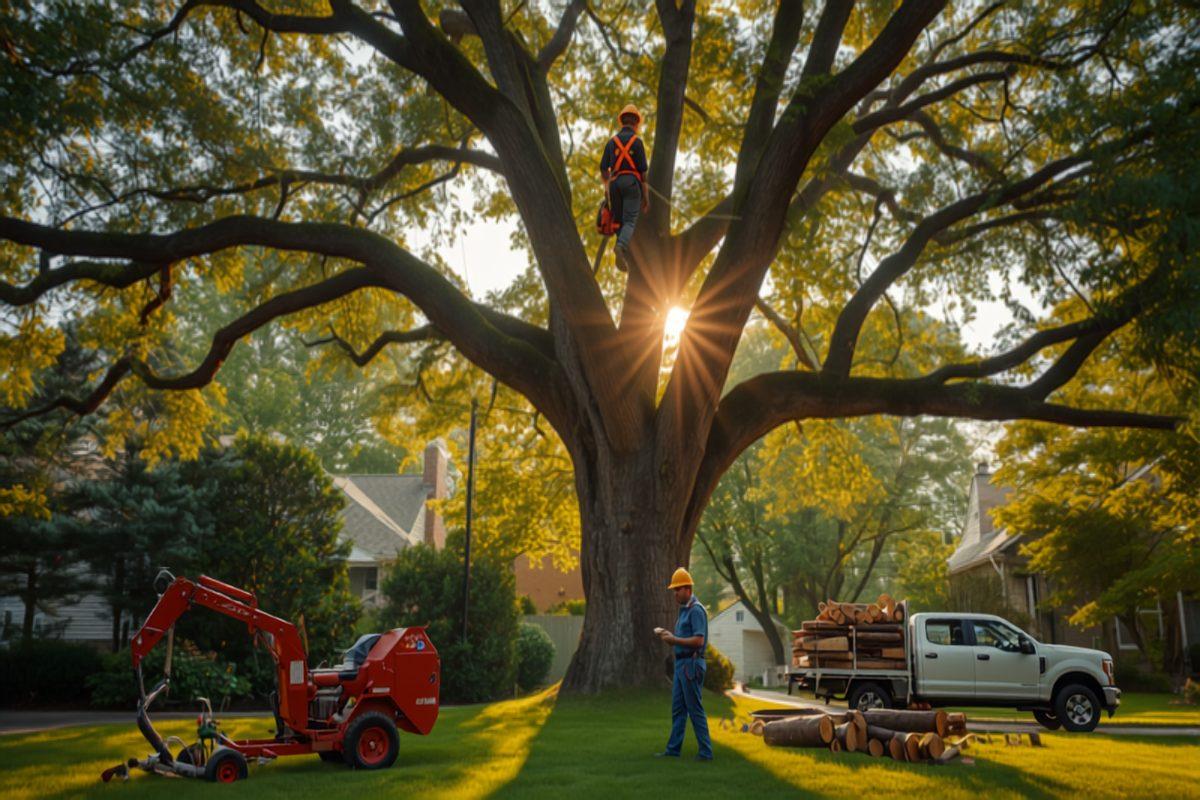
A tree service runs on judgment that is hard to put in a box. A hundred-foot oak leaning over a house is not a line item — it is a read on height, lean, access, what is under it, and how close the power lines are. Bid it too low and a two-day removal eats the crew, the bucket truck, and the profit. Bid it too high and the homeowner takes the number from the guy who showed up an hour later. Then the weather turns, a storm drops half the trees in a subdivision, and the phone does not stop — and the same crew, the same chipper, and the same stump grinder have to be everywhere at once.
Most tree companies run on a general field service app — Jobber, ServiceTitan, Housecall Pro, or one of the more tree-specific tools like Arborgold or SingleOps — plus QuickBooks, a shared calendar, and a whiteboard or spreadsheet for the equipment. Each tool does its job. None of them tells the owner which crews actually make money, which estimator is bidding jobs too thin, or how to line up a climber, a bucket truck, and a chipper on the same address without double-booking the one machine that turns a job into a payday.
This post starts with estimating, because that is where a tree company wins or loses the job. Then it covers crews, equipment, and storm weeks, where the off-the-shelf apps stop short, and the kind of company that benefits most from building rather than renting.
Estimating is where a tree company wins or loses the job
Ask any tree service owner where the money is made or lost and the answer is the bid. A removal is priced on judgment — how tall, how tight the access, how much is over the house, how far to the drop zone, how many hours in the tree. Get it right and the crew clears the job by early afternoon with margin to spare. Get it wrong and a job bid at one day runs two, and the profit walks off with the chipper.
Custom software turns that judgment into a repeatable process without taking the judgment out of it. The estimate is built from the factors that actually drive cost — height, diameter, access, risk, equipment needed — with photos of the tree attached to the bid. When the job closes, the estimated hours sit next to the actual hours, so the owner can see which estimator runs thin and which jobs the company consistently underprices. Over time the bids get tighter, a new estimator has real jobs to learn from, and the number stops depending entirely on who happened to drive out to the site.
Why tree work is different from a generic field service business
On the surface, tree service looks like any other trade — a visit, a job, an invoice. Underneath, the operation has a shape the generic route-and-recurring tools do not model well. The differences that matter:
- Estimating is risk pricing, not a service menu. The price of a removal depends on tree height, diameter, lean, deadwood, access for a bucket truck or crane, and how close the drop zone is to a house, a fence, or a power line. Two jobs that read the same on a service list can differ by a full day of climbing. A flat rate card cannot hold that, so the number ends up in the estimator’s head.
- A job needs equipment, not just people. A single removal can require a climbing crew, a bucket truck, a chipper, a stump grinder, and sometimes a crane — and the schedule has to reserve all of them together. Most field service apps schedule people and treat the machines as an afterthought, which is exactly how two crews end up assigned the same chipper on the same morning.
- Demand spikes with the weather. A single storm can triple the call volume in a week, most of it urgent, some of it insurance work, all of it competing for the same crews and equipment. A tool built for a steady weekly route has no gear for the surge — no fast intake, no way to triage emergency removals ahead of routine trims.
- Safety is a liability the moment a crew leaves the yard. Tree work is one of the most dangerous trades there is. Climber certifications, aerial-rescue and first-aid training, equipment inspection logs, and the daily job briefing are not paperwork — they are what an insurer and an injury lawyer will ask for. When those records live in a binder in the truck, they may as well not exist.
- The job is not done when the tree is down. A removal leaves a stump, a pile of chips, and a lawn that needs cleanup — and stump grinding is often a separate crew on a separate day. If the follow-up is not tracked as part of the same job, it slips, the customer calls, and a profitable removal turns into an unpaid return trip.
- Margin hides in a few hours of crew time. The bid, the crew hours, the equipment time, the dump and disposal fees, and the drive time between jobs decide whether a removal made money — and almost none of it shows up in a standard schedule view. An owner can run a busy week and still not know which jobs paid.
What the off-the-shelf apps get right — and where they stop
There are capable tools in this space. Jobber and Housecall Pro handle scheduling, invoicing, and customer communication well, and Arborgold and SingleOps were built with tree work in mind — they understand phased proposals and plant health care in a way the general apps do not. For a straightforward residential shop, one of them will cover most of the day-to-day, and replacing them wholesale is usually the wrong call. The opportunity is more specific than that.
The cracks tend to show up in three patterns as a tree company grows:
Estimating still lives in the estimator’s head. The app captures a price, but not the reasoning — the height, the access, the risk factors, the equipment the job will need. So the bid is only as good as the person who wrote it, there is no way to check a number against how the job actually ran, and a new estimator has nothing to learn from.
Equipment is invisible on the schedule. The platform books crews and dates, but the bucket truck, chipper, stump grinder, and crane are tracked somewhere else — or nowhere at all. The result is the double-booked machine, the crew that shows up without the grinder, and the maintenance that gets skipped until something breaks down mid-job.
Reporting does not match how an owner runs the company. Owners want margin by job, by crew, and by service type; estimated hours versus actual; disposal and equipment cost against the bid; and which lead sources send jobs that actually close and pay. The apps report on invoices and completed visits; the owner wants reports on crews, equipment, and bids.
What custom software for a tree service typically includes
Most builds we scope cluster around the same core set of modules. The exact mix depends on whether the company does removals, trimming, plant health care, or all three, how many crews and machines it runs, and whether it wants to replace its field service app or build a smarter layer around it. The recurring pieces:
- Photo-and-risk estimating — an estimate built from the tree’s height, diameter, access, and proximity to structures and power lines, with site photos attached, so the bid carries its own reasoning instead of a bare number, and every estimator prices the same job the same way.
- Crew and equipment scheduling — a single schedule that reserves the crew and the bucket truck, chipper, stump grinder, or crane together, so a job is never dispatched without the machine it needs and no two crews are assigned the same equipment.
- Field crew app — the job details, site photos, drop-zone notes, and the safety briefing on the phone or tablet the crew already carries, with before-and-after photos, hours, and completion captured on site instead of remembered back at the shop.
- Stump grinding and cleanup follow-up — the second visit tracked as part of the original job, so grinding, chip haul-off, and cleanup are scheduled, billed, and closed instead of slipping into an unpaid return trip.
- Safety and certification tracking — climber and groundworker certifications, aerial-rescue and first-aid training, and equipment inspection logs with expiration alerts, plus daily job briefings and incident reports captured from the field, matching what ANSI Z133 and your insurer expect to see.
- Storm and emergency intake — a fast intake and triage mode that captures a surge of urgent calls, flags emergency removals and insurance work, and lines them up against available crews and equipment without breaking the normal schedule.
- Equipment maintenance tracking — hours, service intervals, and inspection dates for every truck and machine, so maintenance is scheduled before a breakdown strands a crew in the middle of a removal.
- Invoicing and payments — the approved estimate flowing straight to an invoice with deposits, progress billing on large multi-day jobs, and card or ACH payment, tied back to QuickBooks so nothing is re-keyed.
- Owner reporting — margin by job, by crew, and by service type; estimated versus actual hours; equipment and disposal cost against the bid; and close rate and profit by lead source, so the owner can see which crews and which kinds of work actually pay.
None of these features is unique to custom software in the abstract. The point of building custom is that all of them work the way your company runs — your pricing logic, your equipment list, your safety program, your storm playbook — in one system, without the re-keying and reconciliation that comes from stitching a field service app, a spreadsheet, and a whiteboard together.
The storm week is the test no generic tool passes
Tree work has a demand curve unlike almost any other trade. A quiet month can turn into the busiest week of the year overnight when a storm rolls through and drops limbs and whole trees across a service area. The phone rings off the hook, half the calls are emergencies, some are insurance jobs with their own paperwork, and every one of them wants a crew today. A tool built for a steady weekly rhythm has nothing for that moment.
Custom software can carry a storm mode: fast intake that captures a flood of calls without slowing down, triage that pushes emergency removals and hazard trees ahead of routine trims, and a live view of which crews and which machines are free to take the next job. Instead of the office drowning in a legal pad full of call-back numbers, the surge becomes a queue the company can actually work — and a storm week turns from chaos into the most profitable stretch of the year.
Who benefits most from a custom build
Not every tree company needs custom software. The ones that benefit most have at least two of the following:
- Enough crews and equipment that scheduling people and machines together is a real daily problem, and the double-booked chipper or the crew without the grinder happens more than it should.
- A pricing problem — bids that live in one or two estimators’ heads, jobs that come in over the estimate too often, and no way to check a bid against how the work actually ran.
- Real exposure to storm surges, where the ability to intake and triage a flood of urgent calls is the difference between a windfall week and a missed one.
- A growing safety and insurance burden: certifications, training, equipment inspections, and job briefings that a binder in the truck can no longer keep straight.
- Follow-on work — stump grinding, cleanup, plant health care — that slips through the cracks and turns into unpaid return trips.
- Owner-level questions the app cannot answer: margin by job and by crew, estimated versus actual hours, and which service types and lead sources actually pay.
If a company is a single crew running a steady book of trims and small removals, an off-the-shelf app is almost always the right answer. Custom software is most useful when the crew count, the equipment fleet, the storm exposure, and the safety load are real enough that the workarounds in the generic tools start costing real money — and real jobs — every month.
What a build looks like in practice
We start with the workflow, not the screens. Before any code is written, we map the actual operation: how a call becomes a site visit and a bid, how the bid turns into a scheduled job with the right crew and machines, how the crew works and documents the job in the field, how stump grinding and cleanup get closed out, how hours and disposal costs flow into the invoice and the books, and where the office loses time re-entering the same information. The custom software is built around that map.
Most tree service builds ship the core operation first — photo-based estimating, the crew-and-equipment schedule, and the field app — and add safety and certification tracking, storm intake, equipment maintenance, and owner-level job-cost reporting in later phases. That sequencing keeps the project tight and puts the business value into estimating and scheduling early, where the daily money is made and lost.
Fixed price. No hourly billing. The scope and cost are agreed before any code is written, and we build against that scope.
Frequently asked questions
What software do tree service companies typically use, and where does it fall short?
Most tree care companies run on a general field service platform like Jobber, ServiceTitan, Arborgold, SingleOps, or Housecall Pro, plus QuickBooks for the books, a shared calendar for the crews, and a spreadsheet or a whiteboard for the equipment. Arborgold and SingleOps are the closest to purpose-built for tree work, and for a straightforward residential shop one of them covers most of the day. The cracks show when estimating depends on tree height, access, and proximity to structures and power lines rather than a flat service menu; when the schedule has to line up a climbing crew, a bucket truck, a chipper, and a stump grinder on the same job; when storm work triples the call volume in a week; and when the owner wants to know real job-cost margin by crew and by service type — profit numbers those platforms will not produce.
Can custom software help a tree service track equipment and safety compliance?
Yes, and for a tree company that is often the point. A custom build can schedule the bucket truck, chipper, stump grinder, and crane against the jobs that need them so two crews are never assigned the same machine, and track maintenance intervals, hours, and inspection dates so a piece of equipment is not sent out overdue. On the safety side it can hold each climber and groundworker’s certifications, first-aid and aerial-rescue training, and equipment inspection logs, capture the daily job briefing and any incident reports from the field, and flag an expiring credential before a crew is scheduled on a job that needs it — the ANSI Z133 and TCIA-style record insurers and clients increasingly ask to see.
How long does it take to build custom software for a tree service company?
A focused first build — photo-based estimating, a crew and equipment schedule, and a field app for crew notes, photos, and job completion — typically ships in eight to twelve weeks once the scope is defined. Adding stump-grinding and cleanup follow-ups, safety and certification tracking, storm-mode intake, and owner-level job-cost reporting extends the timeline. We scope the project before any code is written, so the timeline and cost are known up front.
If your tree service has outgrown the patchwork of tools you started on, start with a conversation. We will scope the workflow before talking about a build.
Ready to talk about your project?
Tell us what you're building. Brad reviews every submission personally.
Start Your Project