Custom Software for Veterinary Practices: Reminders, Declined Services, and Reporting Around Your PIMS
You are not going to rip out Cornerstone, AVImark, or ezyVet — and you should not. The opportunity is the layer around the practice information management system: vaccine and recall reminders, declined-service follow-up, boarding and grooming, and the multi-location reporting your PIMS will never give you. Here is what custom software for a veterinary practice actually looks like.
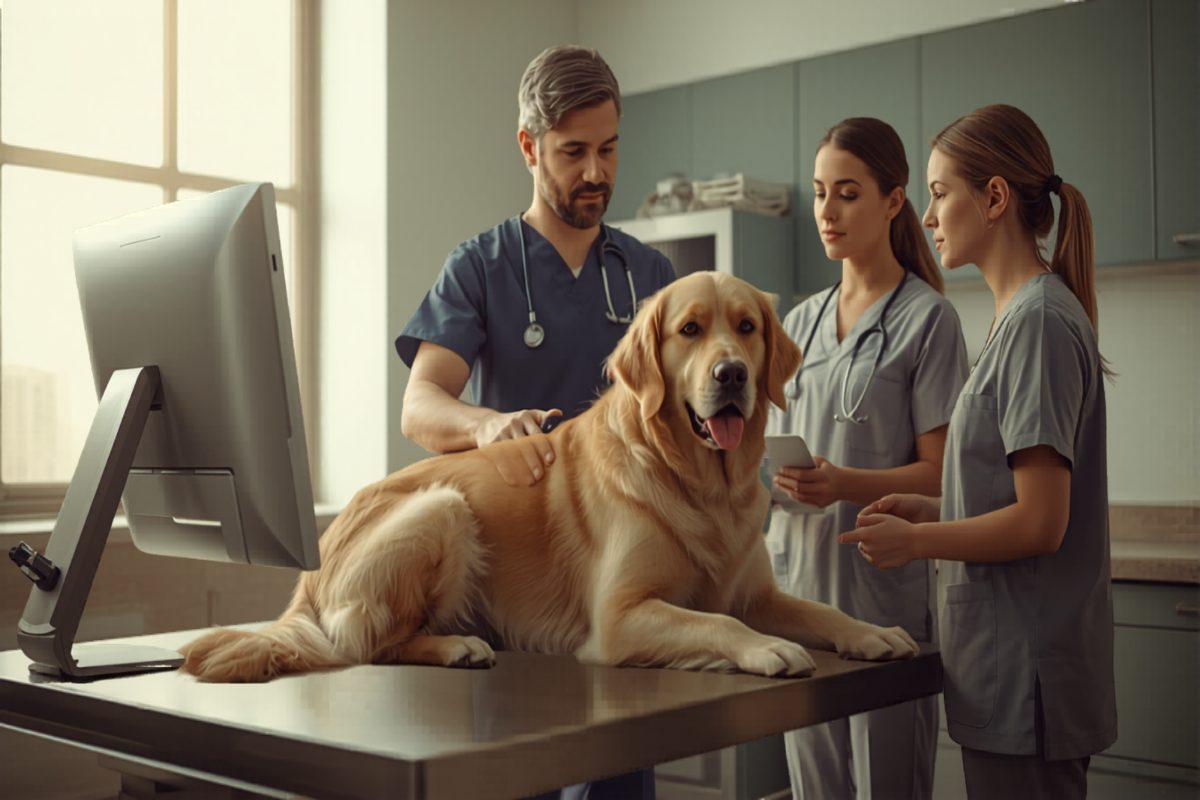
A veterinary hospital is one of the few small businesses where the core software is genuinely good at its core job. Cornerstone, AVImark, ImproMed, ezyVet, and Pulse handle the medical record, prescription history, lab and imaging integrations, scheduling, and invoicing well enough that nobody seriously proposes ripping them out. If your technicians chart in the system every day and your front desk knows it cold, replacing it would be its own kind of malpractice.
So this is not a post about replacing your practice information management system. It is a post about everything the PIMS does poorly — or does not do at all — and the revenue that quietly leaks out of those gaps every month. Declined dentals and bloodwork that nobody follows up on. A reminder program that ends at a postcard. Boarding and grooming run on a paper book. A controlled-substance log in a three-ring binder. And, for any practice with more than one location, an owner who cannot get a single clean number across hospitals without exporting reports and rebuilding them in a spreadsheet on a Sunday night.
Custom software for a veterinary practice is built as a layer around the PIMS, not a replacement for it. This post covers where that layer pays for itself, what it typically includes, and the kind of practice that benefits most.
Why the PIMS leaves money on the table
Practice information management systems were designed around the medical encounter and the invoice. They are records and billing systems first. The workflows that drive revenue — getting recommended services booked, getting patients back for wellness and vaccines, keeping the schedule and the boarding kennels full — were bolted on later, and they show it. The gaps that matter:
- Declined services go cold. Every practice has a pile of recommended-but-declined care sitting in the record — dentals, senior bloodwork, follow-up rechecks, and heartworm or flea-and-tick plans the doctor recommended and the client never booked. The PIMS will run a report if you ask it, but it will not work the list for you. Without a system that surfaces, ranks, and follows up on declined care, real revenue and real patient outcomes age out every month.
- Reminders stop at the postcard. The vaccine and wellness reminder is the engine of a healthy practice, and in most hospitals it is a one-shot postcard or email the PIMS fires on a due date. It does not run an escalating program with text, email, and a call worklist, reactivate patients who lapsed two cycles ago, or give the owner a measurable compliance rate by service and by doctor.
- Boarding, grooming, and daycare live outside the system. These cash services are some of the steadiest revenue a practice has, and they are almost always run on a paper kennel book, a whiteboard, and a separate calendar. Availability, feeding and medication instructions, vaccination requirements, deposits, and run assignments are manual, and double-bookings and missed meds are a constant risk.
- Client communication is scattered across tools. Confirmations, reminders, prescription-ready notices, lab-result updates, and post-visit check-ins go out from three or four different apps, none of which log back to the patient record. The front desk works out of multiple tabs and the client gets an inconsistent experience.
- Reporting stops at the single hospital. The PIMS reports on one database. An owner with two, three, or more locations — increasingly the norm as practices consolidate — cannot see revenue per doctor, average client transaction, reminder compliance, declined-service value, and new patients across the group without exporting each hospital and rebuilding the report by hand.
- Controlled substances and inventory are a paper job. The DEA log lives in a binder, vaccine and drug inventory is counted by eye, and expired product and reorder points are caught late. None of it reconciles automatically against what was actually dispensed in the medical record.
What the off-the-shelf add-ons get right — and where they stop
There is a whole industry of veterinary add-on software, and some of it is genuinely good. Client-communication platforms, online-booking widgets, and reminder tools each solve a slice of the problem. For a single-location practice that wants automated confirmations and a few review requests, one of these is often the right answer, and custom software would be overkill.
The cracks show up in three predictable patterns.
You end up renting six tools that do not talk to each other. A reminder tool, a booking tool, a boarding tool, a payments tool, a reviews tool, and a reporting dashboard — each with its own monthly per-location fee, its own login, and its own partial view of the client and patient. The data never lives in one place, so the front desk works out of five tabs and the owner still cannot get a single answer.
The reporting is generic, not yours. The dashboards these tools ship report the metrics the vendor chose, sliced the way the vendor decided. An owner who manages to revenue per doctor, average client transaction, reminder compliance by service, and dental or bloodwork acceptance — with their own definitions and goals — is stuck exporting and rebuilding, every month, forever.
Multi-location and shared-doctor structure break the model. Most add-ons are priced and architected per hospital. A growing group with relief and shared doctors, a central call team, one wellness-plan program across locations, and roll-up reporting hits the ceiling of the off-the-shelf tools quickly, and the workaround is more spreadsheets and a part-time analyst.
What custom software for a veterinary practice typically includes
Most builds we scope cluster around the same core set of modules, all sitting on top of the existing PIMS. The exact mix depends on whether the practice is general, specialty, or emergency, single or multi-location, and how mature the reminder and wellness-plan programs already are. The recurring pieces:
- Declined-service dashboard — a live view of every patient with a recommended-but-declined or overdue service, ranked by clinical urgency and revenue, with the outreach status, the last contact, and a one-click way for the team to log a call or fire a text with the recommendation attached.
- Reminder and reactivation engine — automated, escalating outreach for vaccines, wellness exams, and parasite prevention due and overdue, plus a reactivation program for patients who lapsed past their last visit, with a measurable compliance rate the owner can see by service and by doctor.
- Boarding, grooming, and daycare management — real availability and run assignments, feeding and medication schedules, vaccination-requirement checks at booking, deposits, and a daily kennel sheet, run as a real reservation system instead of a paper book and a whiteboard.
- Online booking and intake — clients request or book appointments, boarding, and grooming from their phone, complete new-patient and pre-surgical forms before arrival, and have it written back to the PIMS so nothing is keyed twice.
- Two-way client communication — confirmations, reminders, prescription-ready and lab-result notices, and post-visit check-ins over text and email from a single thread per client, logged against the record instead of scattered across separate apps.
- Wellness-plan and membership management — enrollment, recurring billing, benefit tracking, and failed-payment recovery for monthly wellness plans, run as a real subscription system across locations rather than a spreadsheet and a payment processor.
- Controlled-substance and inventory control — a perpetual controlled-substance log reconciled against the medical record, plus vaccine and drug inventory by location with reorder points and expiration alerts, so compliance and stock are byproducts of normal work.
- Multi-location owner reporting — revenue per doctor, average client transaction, reminder compliance, declined-service value, new patients, and inventory shrink, rolled up across every hospital with a comparable scorecard, refreshed nightly from each PIMS database.
None of these features is unique to custom software in the abstract — you can buy a tool for each one. The point of building custom is that all of them work the way your practice runs, read from the PIMS you already use, live in one system with one login, and report on the numbers you actually manage to.
Declined services are where the revenue quietly goes
The single most underused number in a veterinary practice is the total value of recommended, declined, and overdue care sitting in the PIMS. The doctor recommended the dental, the senior panel, or the recheck, the client said “let me think about it,” and then life happened and it never got booked. In a practice of any size that figure runs well into the high five or six figures, and most of it is recoverable — not by recommending more, but by working what has already been recommended.
A custom system makes that pile visible and workable. It pulls every declined and overdue service from the PIMS, ranks it by clinical urgency and revenue, and turns it into a daily worklist the team can actually finish — call this client about the dental, text that one the heartworm-prevention reminder, flag the senior patient overdue for bloodwork. The same engine measures what it recovers, so the owner can watch declined-service value fall month over month instead of guessing whether the follow-up is happening. That single workflow is frequently enough to justify the entire build, and it is better medicine besides.
Multi-location reporting is the owner’s real problem
Veterinary medicine is consolidating fast. Single hospitals are becoming two- and three-location groups, and groups are becoming small regional networks. The moment a practice crosses from one location to two, the reporting problem becomes acute: the PIMS reports on one database, and the owner now needs one comparable view across all of them.
Revenue per doctor, average client transaction, reminder compliance, dental and bloodwork acceptance, new patients per location, and declined-service value — sliced by hospital, by doctor, and by month — is the scorecard a multi-location owner manages the business with. Built-in reports do not produce it, and exporting several PIMS databases into a spreadsheet every month is a job nobody should have. Custom software reads each location’s PIMS nightly, normalizes the data, and presents one scorecard the owner can open on a phone. For most growing groups, that single capability is the reason they call.
Compliance is a design constraint, not an afterthought
Any software that touches prescriptions and controlled substances carries real regulatory weight, and a custom build treats that as a first-class constraint from the first design conversation — a perpetual controlled-substance log reconciled against the medical record, role-based access so staff see what their role needs and no more, audit logging of who changed what, and inventory controls that flag discrepancies before they become a problem. Reading from and writing to the PIMS is done through supported, secured pathways. The documentation requirements get scoped alongside the workflow, before any code is written, so they shape the architecture instead of getting patched on at the end.
Who benefits most from a custom build
Not every veterinary practice needs custom software. The ones that benefit most have at least two of the following:
- More than one location, where roll-up reporting across hospitals would change how the owner runs the group.
- A large pile of declined and overdue services that nobody is systematically working, and a front desk that does not have time to chase it by hand.
- A meaningful boarding, grooming, or daycare operation currently run on a paper kennel book and a whiteboard.
- A wellness or membership plan — or the intent to build one — currently run on a spreadsheet and a payment processor.
- A stack of several monthly subscriptions for reminders, booking, payments, and reporting that do not talk to each other and still leave gaps.
- An owner who manages the practice by a specific set of numbers the built-in reports will not produce without manual rework every month.
If a practice is a single hospital running a healthy schedule with a couple of well-chosen add-ons, an off-the-shelf stack is almost always the right answer. Custom software earns its place when the patient count, the location count, and the revenue at stake are real enough that the gaps around the PIMS start costing meaningful money every month.
What a build looks like in practice
We start with the workflow and the PIMS, not the screens. Before any code is written, we map how the practice actually runs: how services get recommended and tracked, how reminders get worked, how boarding gets booked, how the wellness plan gets billed, and exactly what the owner wants to see on one scorecard. We confirm how we will read from and write to the existing practice information management system, and we scope the controlled- substance and inventory requirements alongside the workflow. The custom software is built around that map.
Most veterinary builds ship the highest-return workflow first — usually the declined-service dashboard and the reminder engine — and add boarding, online booking, wellness-plan billing, and multi-location reporting in later phases. That sequencing keeps the project tight and gets revenue back into the schedule early, while the rest of the system comes online around it.
Fixed price. No hourly billing. The scope and cost are agreed before any code is written, and we build against that scope.
Frequently asked questions
Does custom software replace Cornerstone, AVImark, or ezyVet?
Almost never, and that is the point. The medical record, the prescription history, the lab and imaging integrations, and the controlled-substance logging in a mature practice information management system represent years of data and regulatory weight you do not want to rebuild. Custom software for a veterinary practice is built as a layer around the PIMS, not a replacement for it. It reads from and writes to the PIMS where a supported pathway exists, and it owns the workflows the PIMS does poorly — vaccine and recall reminders, declined-service follow-up, boarding and grooming, online booking, and owner-level reporting across locations.
What veterinary workflow gives the fastest return from custom software?
Declined and overdue services usually win. Every practice has a long list of recommended dentals, bloodwork, and follow-up visits the client nodded at and never booked, plus patients overdue for vaccines and wellness exams that the reminder postcard never reactivated. A custom system that surfaces every patient with a declined or overdue service, ranks the list by clinical urgency and revenue, and automates escalating outreach by text and email tends to pay for the entire build inside the first year — without seeing a single new client.
Can custom software handle controlled-substance and inventory tracking?
Yes, and it is one of the strongest reasons multi-doctor and multi-location practices build. A custom layer can maintain a perpetual controlled-substance log, reconcile dispensed quantities against the medical record, flag discrepancies for review, and track vaccine and drug inventory by location with reorder points and expiration alerts. It is designed around the documentation requirements from the start, so the log is a byproduct of normal work instead of a separate paper binder someone updates by hand.
If your practice has outgrown the patchwork of add-ons around your PIMS, start with a conversation. We will scope the workflow — and how it connects to the software you already run — before talking about a build.
Ready to talk about your project?
Tell us what you're building. Brad reviews every submission personally.
Start Your Project